

Texture, Color, and Pattern: Designing Interiors in Three Dimensions
Minimal interiors are often misunderstood.
They are perceived as quiet, restrained, sometimes even austere. Yet when thoughtfully composed, they are anything but flat. The difference lies not in decoration, but in orchestration.
Texture, color and pattern are not independent decorative tools. They function as a system. When balanced, they transform a neutral space into a layered, sculptural environment.
Texture: The Dimension of Depth
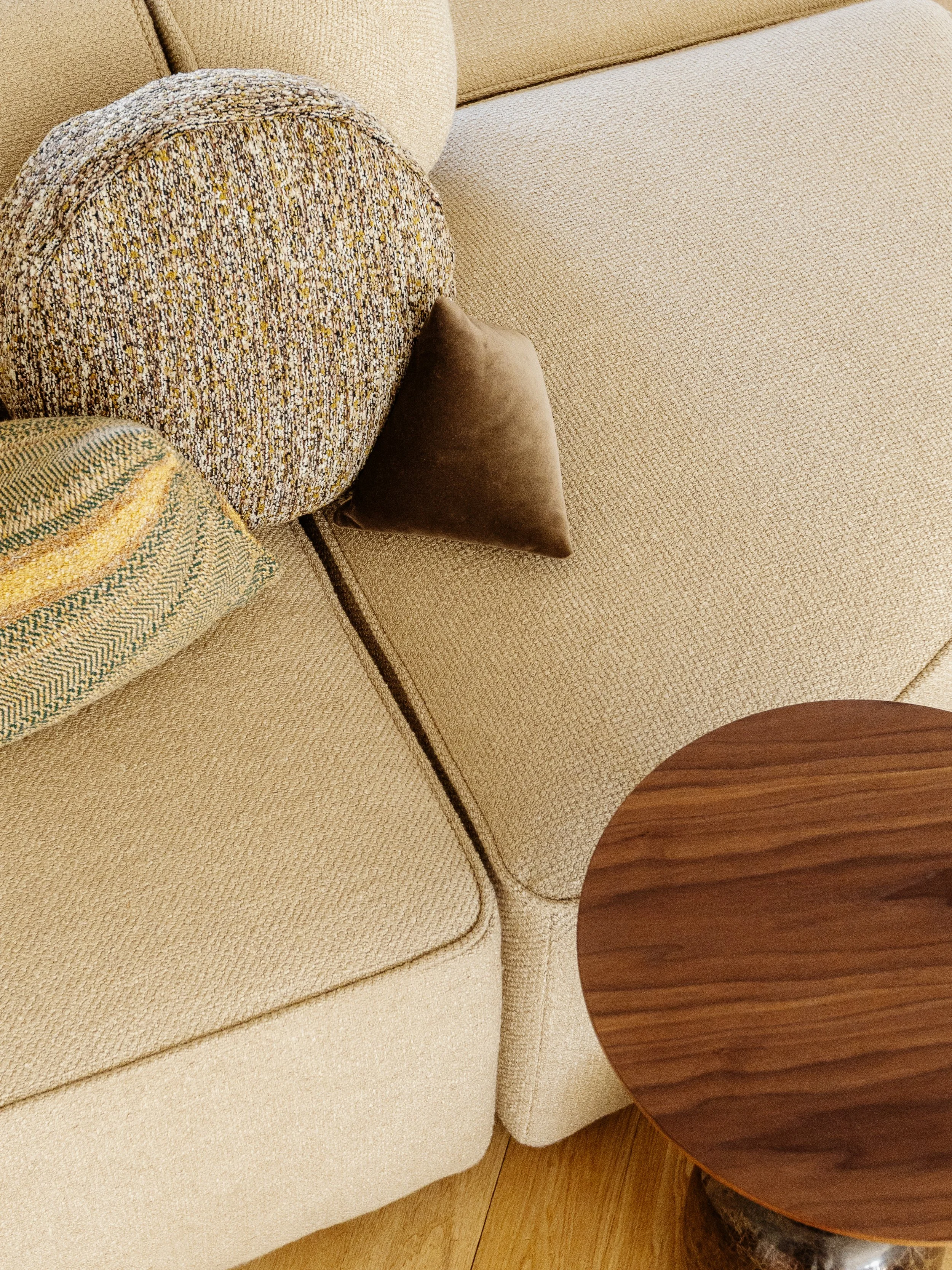
Before color is perceived, texture is felt.
Even visually, our eyes register surface variation first: the grain of walnut, the porous softness of travertine, the density of bouclé, the quiet matte of limewash.
Texture determines how light behaves in a room. It absorbs, reflects, diffuses.
A polished marble surface produces clarity and contrast. Brushed bronze softens reflection. Linen diffuses daylight.
Each decision alters spatial perception.
In a restrained palette, texture becomes the primary driver of richness. Without it, minimalism risks appearing sterile. With it, even an ivory room can feel layered and intentional.
Texture creates depth.
Photo: Project Jus Mundi Headquarters on Avenue Hoche in Paris by Studio Andriotis
Color: The Dimension of Atmosphere
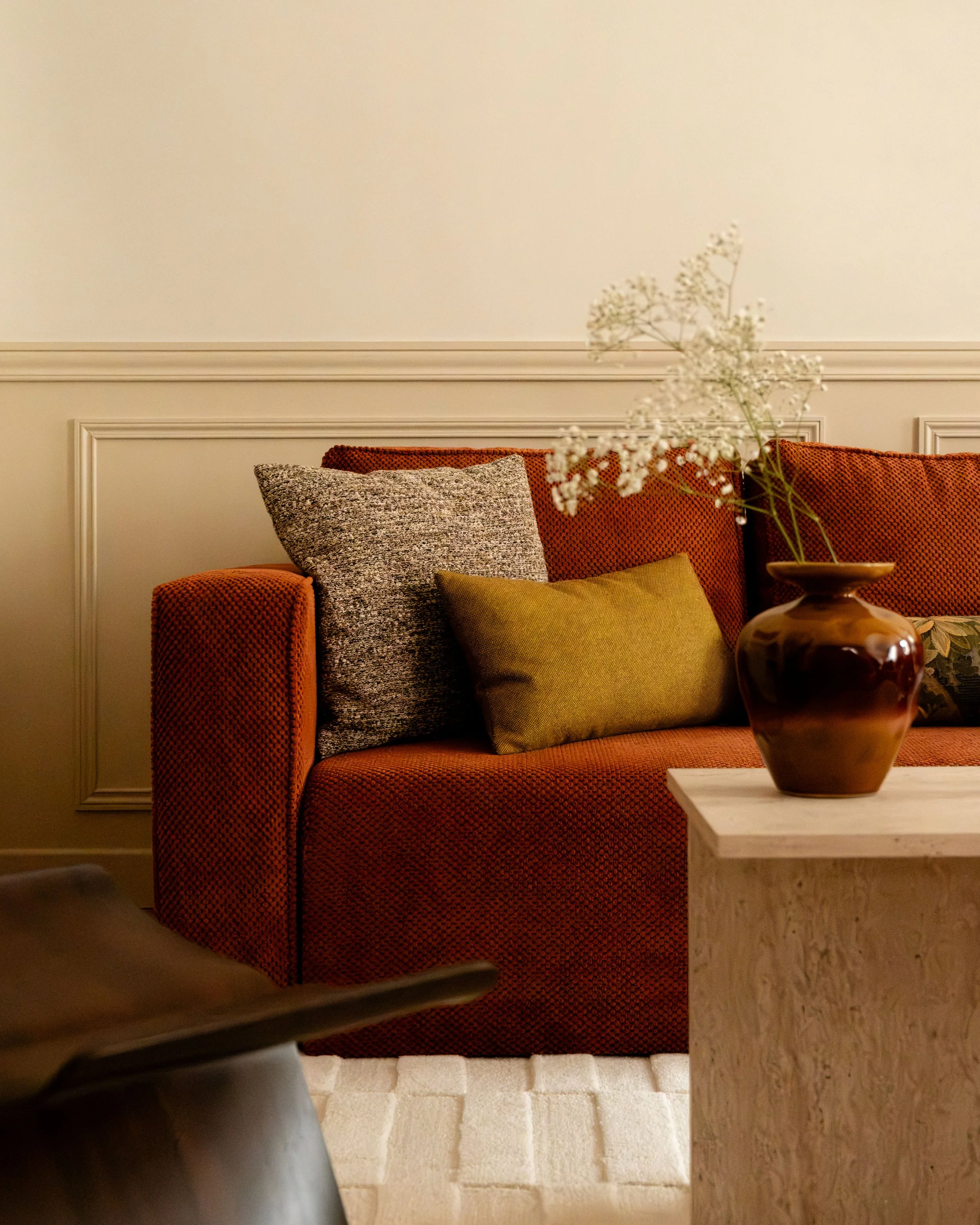
Color establishes emotional temperature.
Two spaces can share the same layout and materials yet feel entirely different depending on undertone.
A beige with yellow undertones radiates warmth. A greige leaning toward slate introduces quiet coolness.
Natural light shifts throughout the day. Morning light can amplify warmth; overcast afternoons flatten contrast.
Designing with color requires anticipating these shifts.
Rather than introducing contrast through bold hues, refined interiors often work within a tonal family: ecru, sand, chestnut, khaki.
The subtle gradation between these shades produces cohesion without monotony.
Color shapes atmosphere.
Photo: Project Opéra in Paris by Studio Andriotis.
Pattern: The Dimension of Rhythm
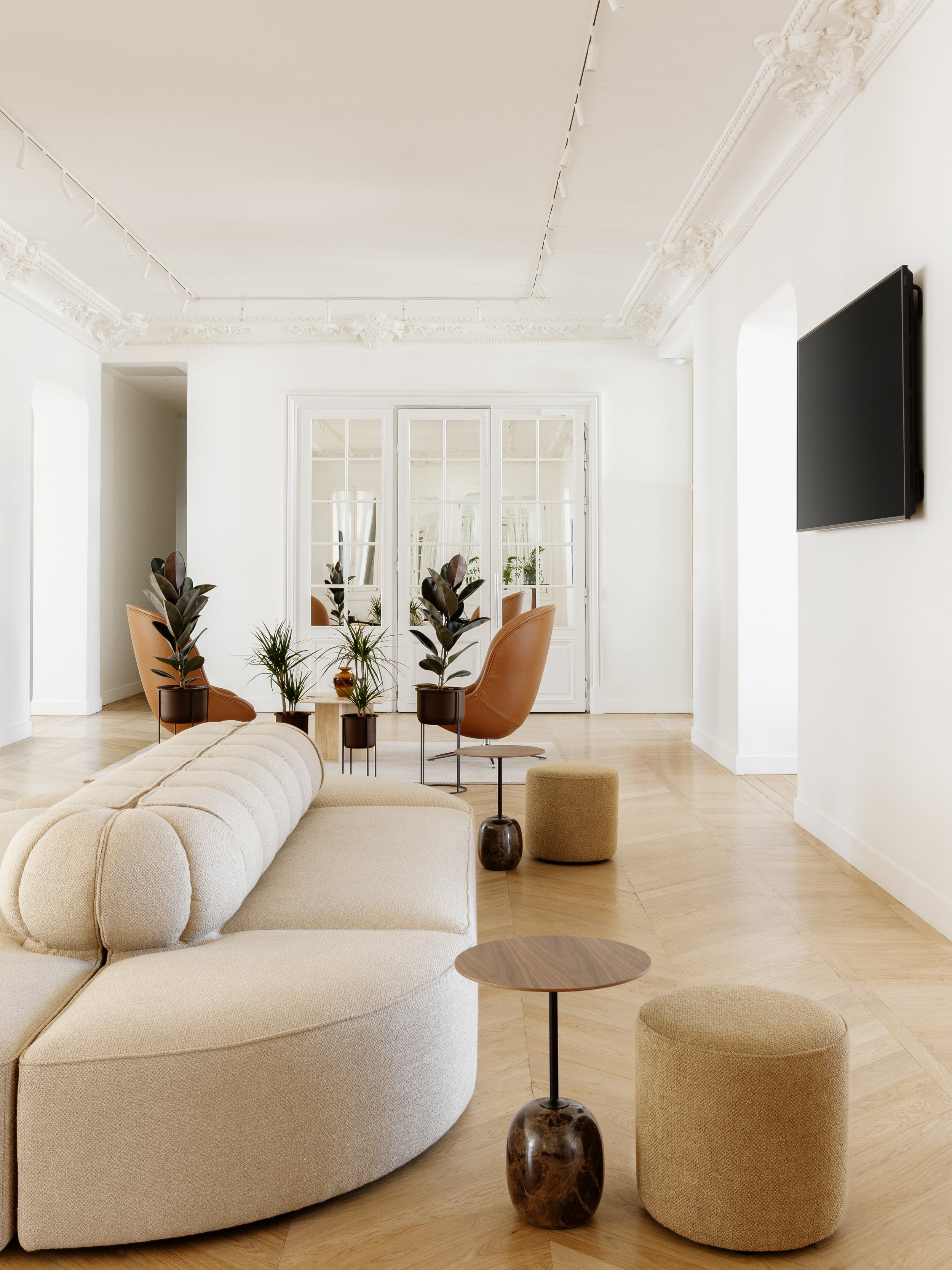
Pattern does not necessarily mean print.
In minimal interiors, pattern often emerges architecturally: herringbone parquet, fluted glass, ribbed wood paneling, woven textiles. Even the repetition of modules in a sofa system establishes visual cadence.
Scale is crucial. Large-scale pattern anchors a room; micro-pattern introduces texture at a secondary reading level.
The key is restraint. When pattern becomes too dominant, it competes with materiality.
Used thoughtfully, pattern introduces rhythm.
Photo: Project Jus Mundi Headquarters on Avenue Hoche in Paris by Studio Andriotis.
When the System Is Unbalanced
If texture is absent, the room feels flat.
If color lacks coherence, the atmosphere becomes unsettled.
If pattern overwhelms, calm dissolves into noise.
True refinement lies in proportion.
A travertine table introduces mineral texture. A chestnut rug grounds the palette. A subtle weave in upholstery adds micro-pattern. None dominate. Together, they form dialogue.
Designing in Three Dimensions
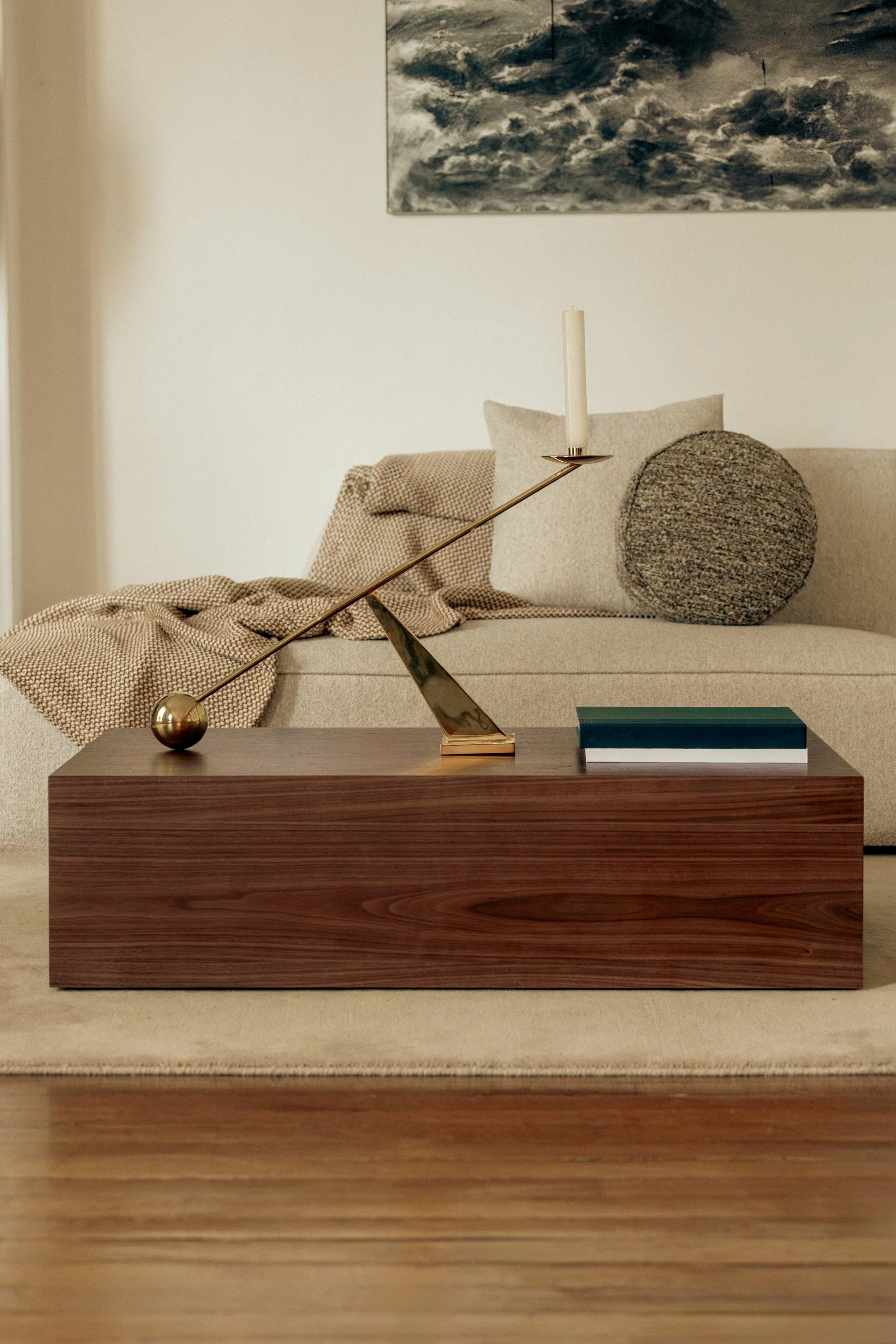
Interior design is often discussed in visual terms.
Yet the most compelling spaces operate beyond sight.
They are tactile, atmospheric and rhythmic.
When texture, color and pattern are aligned, minimalism becomes sculptural rather than sparse.
The space feels considered rather than decorated.
This is where depth replaces excess.
And where restraint becomes expressive.
Photo: Project Saint-Vincent in Paris by Studio Andriotis.
A Considered Interior Begins With Dialogue
Every project begins with a conversation about how a space should feel, not only how it should look.
The identity of a space is rarely defined by a single gesture. It emerges from the deliberate dialogue between materiality, tone and rhythm.
At Studio Andriotis, we approach each project as a composition in three dimensions, balancing texture, color and pattern to create interiors that are sculptural yet livable, refined yet grounded.
To explore how this approach could shape your own project, you may contact us to begin the conversation.